Intelligent Prospecting

in B2B Sales
Most teams still rely on random LinkedIn searches, cold email lists, and gut feeling about timing.
This guide shows you how intelligent prospecting with data and signals gets you ahead.
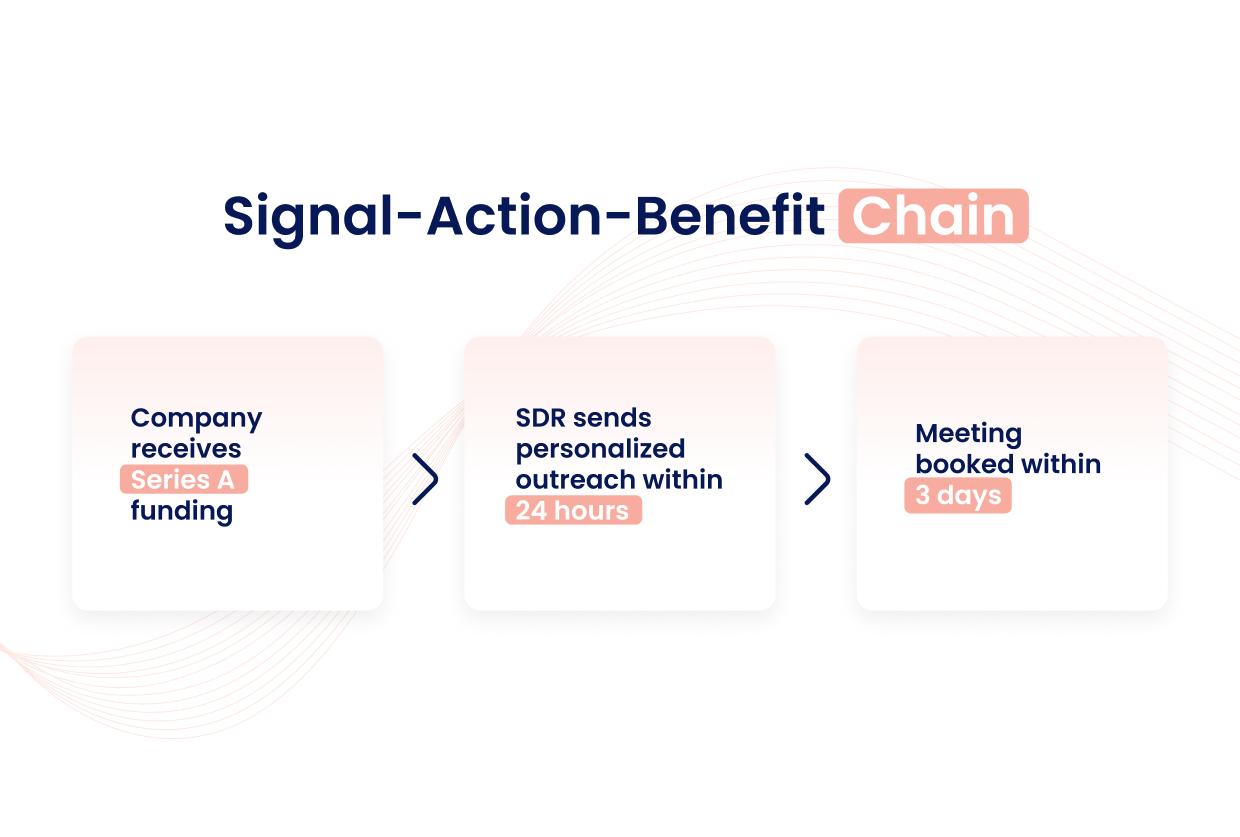
Table of Contents
- Why structured prospecting with data and signals?
- The End Of Random Prospecting
- Assessment: Intelligent Prospecting Readiness Scorecard
- Intelligent prospecting starts now
- How to start with intelligent prospecting
- Devil's in the details: the (often hidden) cost of manual, unstructured prospecting
- Who benefits most from Intelligent Prospecting
Why structured prospecting with data and signals?
You start Monday scrolling LinkedIn without a plan, clicking profiles randomly, hoping someone "looks interesting." You send generic connection requests to hit activity targets — not because prospects are actually in buying mode. You copy-paste the same message dozens of times, hoping something sticks.
By Wednesday, you're exhausted deciding who to contact next. Your manager asks for forecasts, but you can't explain why you picked Account A over B. By Friday, you've burned 20 hours, sent 100+ messages, and booked maybe 2 meetings. Meanwhile, your competitor reached the three accounts that just raised funding — they booked 8 meetings because they knew exactly where to focus and when to act.
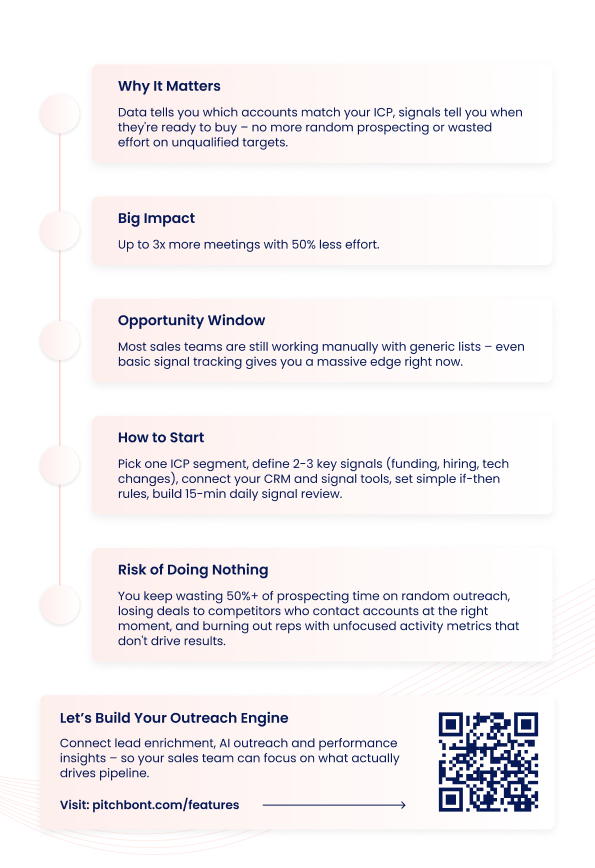
That's why successful teams use data and signals to know who to target, when timing is right, and where to focus energy on real intent.
They show you WHERE: Instead of aimless scrolling, you target companies with fresh funding, rapid hiring, or tech stack changes indicating buying intent.
They tell you WHEN: Instead of random calendar-based outreach, you reach out after job postings, expansion announcements, or content engagement.
The End Of Random Prospecting
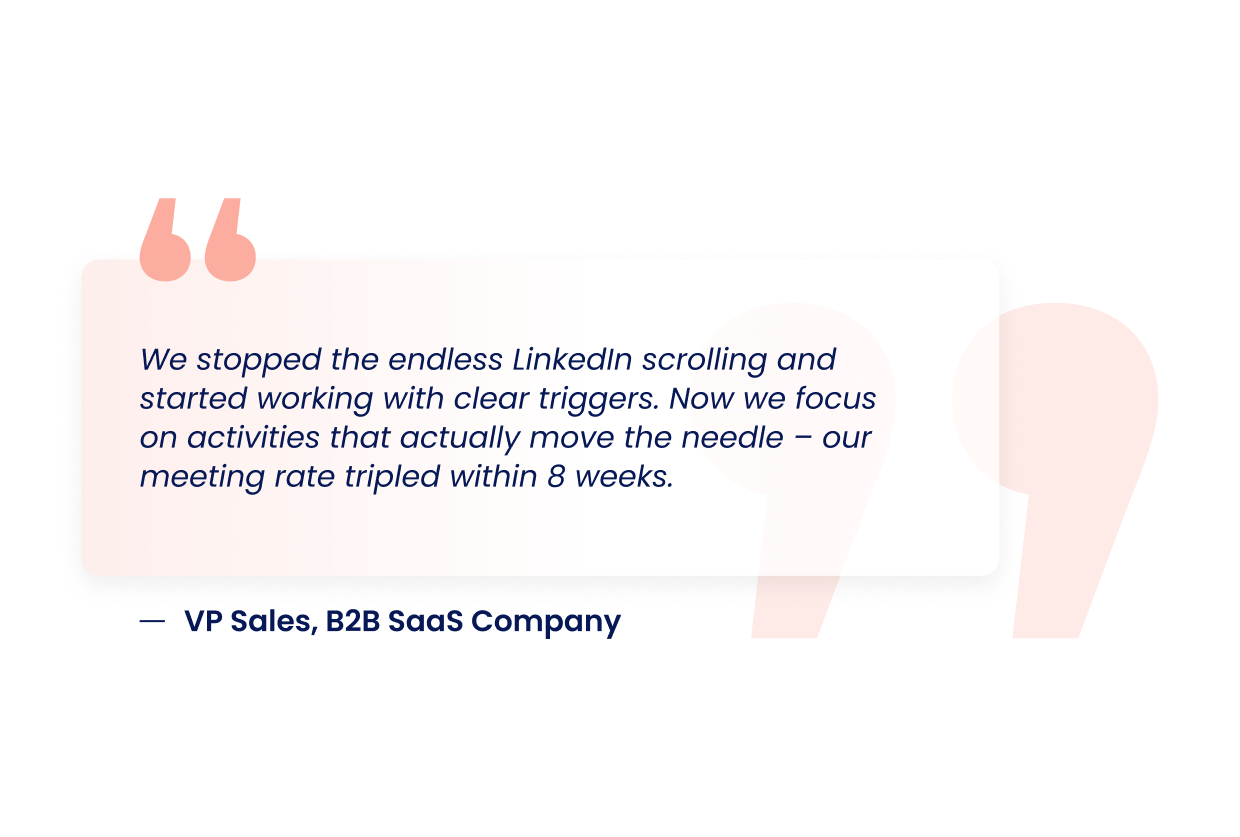
Markets have changed. Decision-makers receive dozens of daily messages, research products independently, and expect relevant, timely communication. Spray-and-pray campaigns and random LinkedIn prospecting no longer work.
Successful teams combine experience with data and buying signals. They know which accounts are actively searching, what triggers indicate buying readiness, and when to invest time.
The result? Less wasted time, higher acceptance rates, faster pipeline velocity, and predictable revenue.
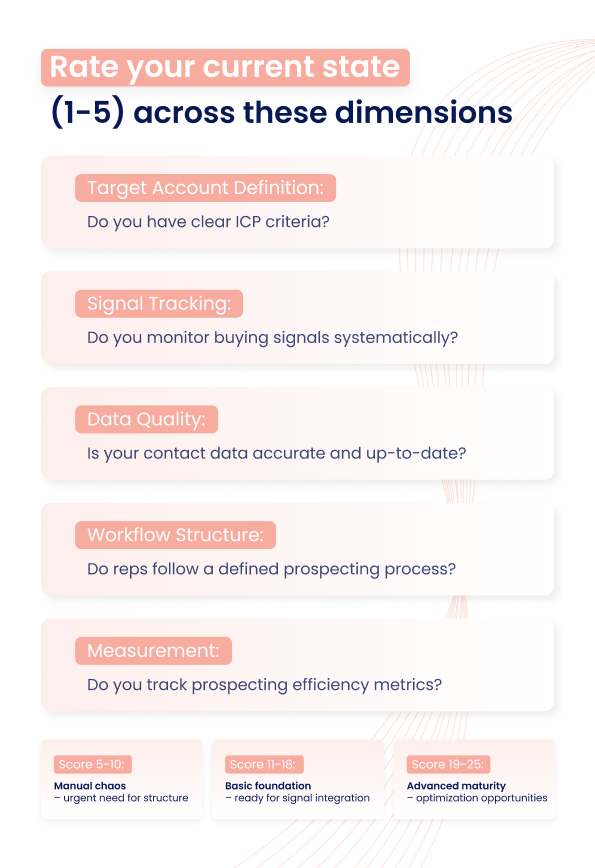
Assessment: Intelligent Prospecting Readiness Scorecard
Intelligent prospecting starts now
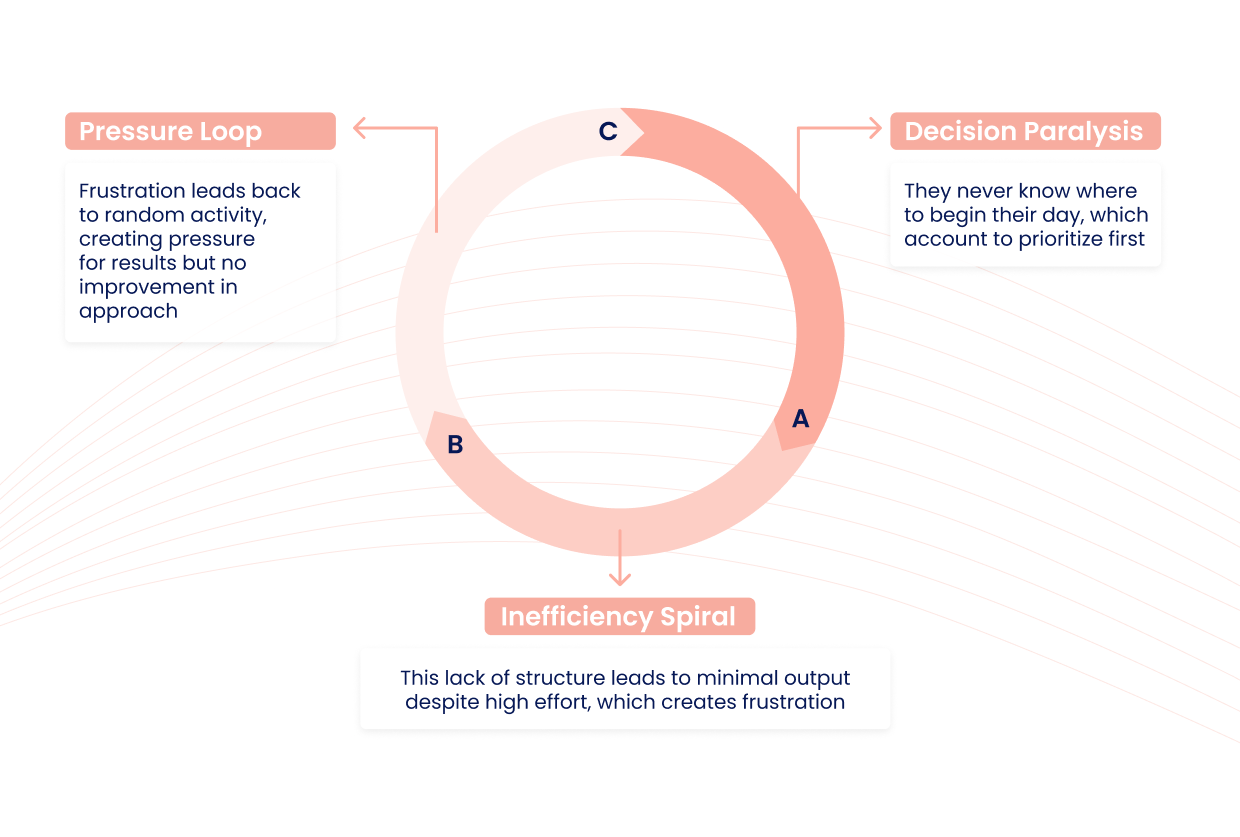
For most salespeople, prospecting is the hardest and most mentally draining part of the job. The biggest challenge isn't the outreach itself — it's the constant decision fatigue of not knowing where to start.
The Manual Reality:
Reps work wildly and unstructured. They jump between LinkedIn, purchased lists, and random Google searches without a clear starting point. This creates three compounding problems:
- No clear starting point leads to wasted time on low-priority accounts.
- Lack of signals means outreach happens at the wrong moment.
- No system = no learning, so conversion rates never improve.
The Structured Approach with Data and Signals:
The fundamental shift is thinking before acting — not working harder, but working smarter through upfront strategic clarity.
Step 1: Strategic Clarity
Before any outreach, you ask: "Who do I actually want to reach?"
This means defining:
- Which target segment (industry, company size, geography)
- Which specific persona (role, seniority, function)
- Which core message resonates with their pain points
This intellectual work upfront is what many mistake as "not necessary with automation." But it's actually the opposite: automation and signals work because you've done this thinking first.
Step 2: Structured Execution
You then proceed systematically (not manually, but structured):
- "I want to reach companies in Industry A with decision-makers in Function B"
- You set up automated signal tracking for relevant triggers
- You only act when a clear reason exists to reach out

→ Efficiency comes from strategic thinking before action, not from ad-hoc individual decisions in the moment.
The Measurable Outcome:
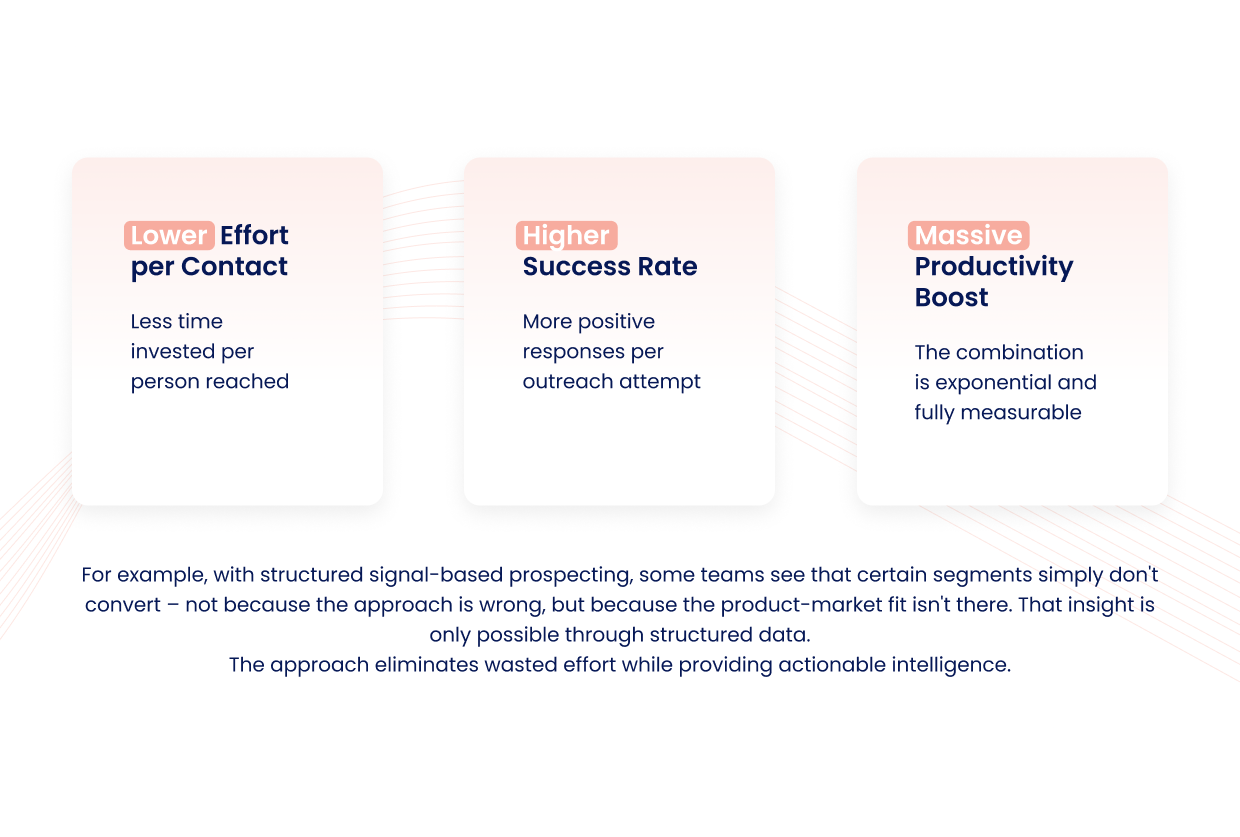
- Meeting rates increase by up to 3x
- Prospecting time reduced by up to 50%
- Conversion rates improve through better timing and relevance
- Pipeline becomes more predictable and easier to forecast
How to start with intelligent prospecting
You don't need to overhaul everything at once. Start with these five focused steps:
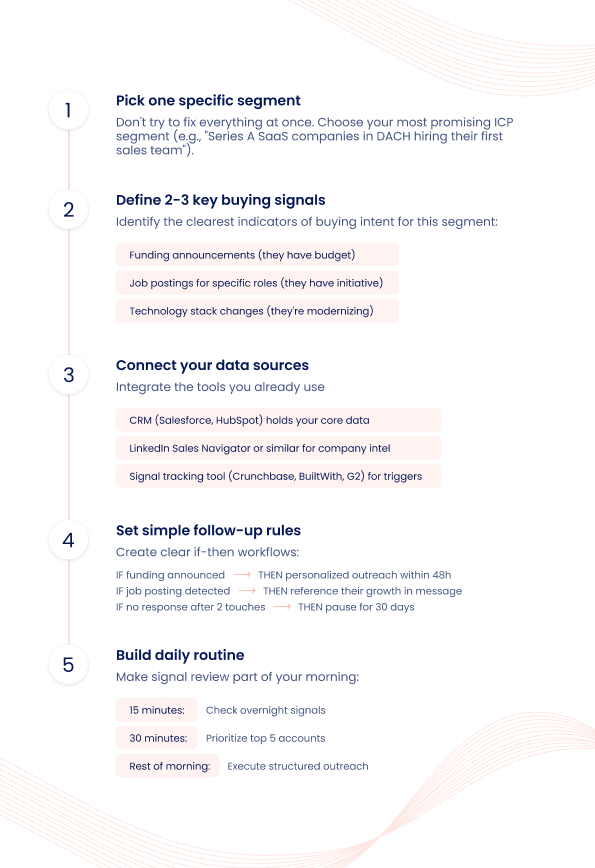
- Define your ICP (Ideal Customer Profile) — segment by industry, size, geography, and persona before touching any tool.
- Identify your top buying signals — funding rounds, new hires, job postings, tech stack changes, or content engagement.
- Set up signal tracking — use tools like LinkedIn Sales Navigator alerts, Bombora, or Apollo to monitor triggers automatically.
- Build a signal-triggered outreach cadence — only reach out when a relevant signal fires, with a message tied directly to that trigger.
- Measure and iterate — track which signals drive the highest conversion rates and double down on those.
→ Quick Win Example:
Start by manually checking 10 target accounts weekly for job postings. If you see hiring for roles adjacent to your solution (e.g., they're hiring Customer Success → they're growing → good time to pitch your CS platform), reach out immediately. Track the conversion rate. When it works, automate the tracking.
Devil's in the details: the (often hidden) cost of manual, unstructured prospecting
Relying on random LinkedIn searches, gut-feel targeting, and spray-and-pray outreach means leaving qualified opportunities on the table.
Prospecting costs remain unnecessarily high.
A structured, signal-based approach is more cost-effective because it cuts waste at every stage of the sales process:
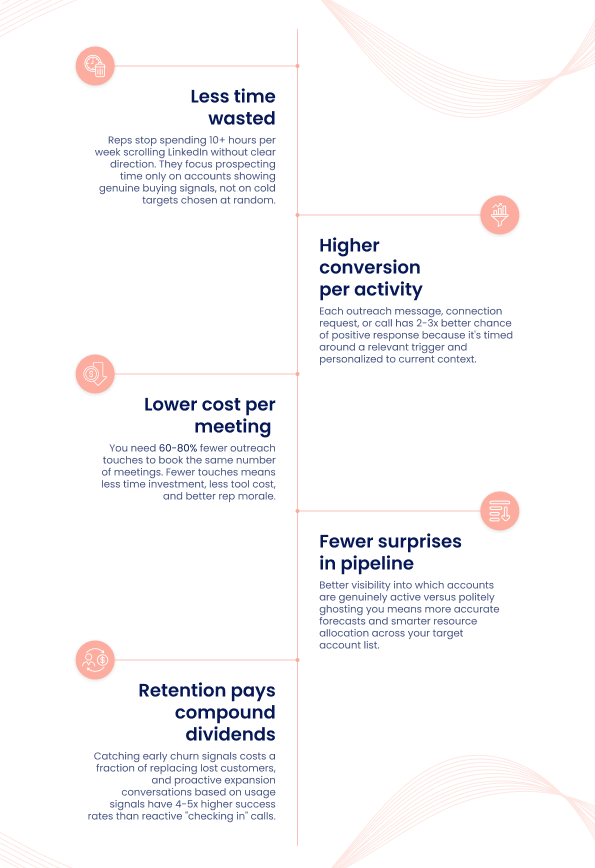
- Time cost: Reps spend 40–60% of their time on research and list-building instead of selling.
- Opportunity cost: High-intent accounts get missed while reps chase cold, unqualified leads.
- Conversion cost: Low response rates from poorly timed, generic outreach waste messaging budget and rep capacity.
- Morale cost: Constant rejection from untargeted outreach leads to burnout and high SDR turnover.
Who benefits most from Intelligent Prospecting
Companies with 100+ target accounts, where manual research for each account becomes impossible and reps start cutting corners or making random choices.
Competitive industries such as SaaS, MarTech, or HR Tech, where 5–10 vendors are chasing the same accounts and timing often decides who gets the initial meeting.
Sales teams with 5+ SDRs or AEs, where structured processes and signal-based prioritization help align individual efforts and prevent duplicate outreach or missed opportunities.