Increase Performance
through Data and Signal-Driven Sales

Most teams still rely on static lists, cold calls, and gut feeling.
This guide shows you how using data and buying signals gets you ahead of the competition.
Table of Contents
- Why data and signals?
- The New Reality in Sales
- The opportunity window is still open
- Assessment: Data and Signals Readiness Scorecard
- Impact in Daily Sales Practice
- Who Benefits Most from Data and Signals
- The Cost of not using Data and Signals
- Quick Recap
Why data and signals?
Does this sound familiar?
You start the morning scrolling through your CRM, picking a few accounts more or less at random. You call down your list because it's "time" to check in, not because you know if the timing is right. You send out a few generic emails that sound like they could go to anyone. By the end of the week, you've spent hours chasing people who weren't ready to buy — while the real opportunities slipped by unnoticed.
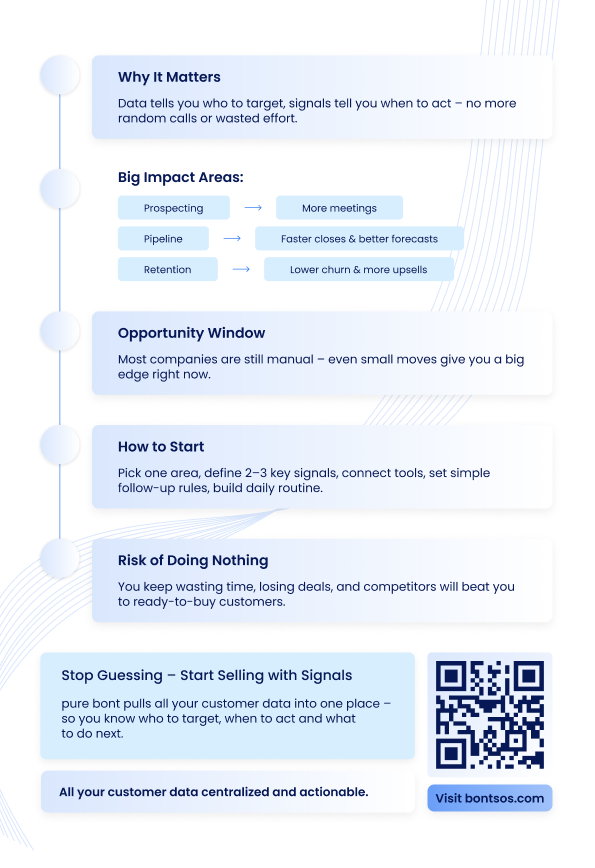
That's why successful companies use data and signals to prospect at the right moment, focus their pipeline on the deals most likely to close, and retain customers by acting early when churn signals appear.
Data and signals help across the entire sales process — they make prospecting more targeted, pipeline management more focused, and customer retention more proactive.
They show you where the real opportunities are. Instead of calling down static lists, you focus on companies with fresh funding or rapid hiring.
They tell you when it's the right moment to act. Instead of chasing randomly, you follow up right after a proposal is opened or a pricing page is visited.
The New Reality in Sales
Markets have changed. Buyers are better informed, have more options, and expect faster responses. Traditional methods such as fixed call cycles and gut feeling no longer deliver consistent results.
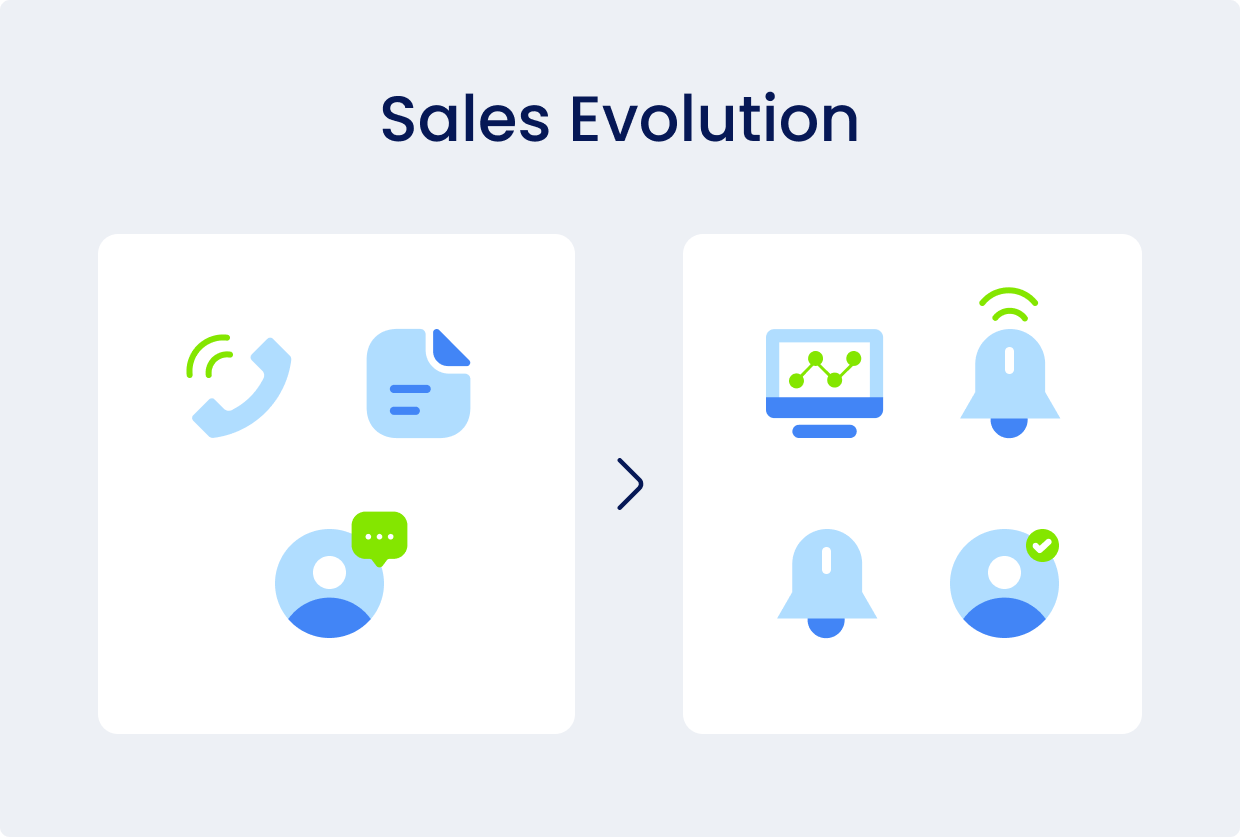
Successful sales teams are aware — and now combine their experience with the intelligent use of data and signals. They know when a prospect is active in the market, what context they are operating in, and when it is worth making a move.
The result? Fewer wasted calls, lower cost per lead, higher close rates, and stronger customer relationships.
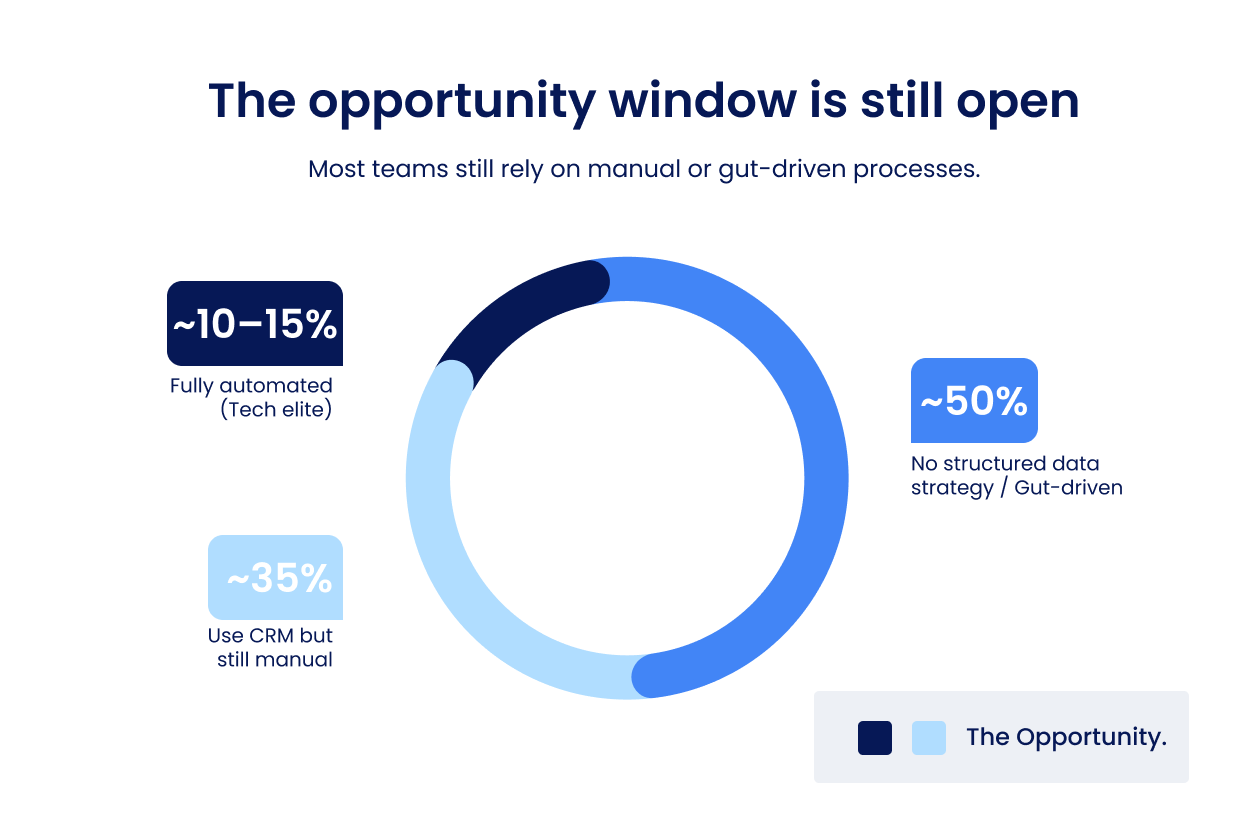
The opportunity window is still open
Only a small tech elite is fully automated. About a third use a CRM but still work manually. The majority have no real data strategy and rely on gut feeling. That's where the upside is huge: even small moves — like checking which ten customers engaged last or spotting the fastest-growing sector in your portfolio — can make a real difference.
→ For sales leaders, it means the window is still open. You can get ahead while many others haven't even started. Yet.
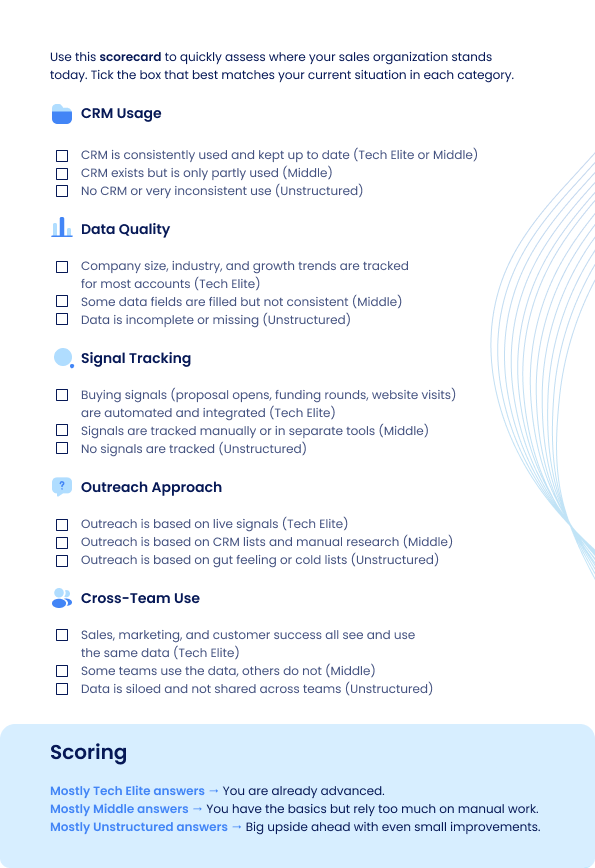
Assessment: Data and Signals Readiness Scorecard
Impact in Daily Sales Practice
Prospecting, pipeline management, and customer retention — data and signals make all three easier by showing you where to focus and when to act:
Outreach — More effective prospecting
For most salespeople, prospecting is the hardest and most draining part of the job. Cold lists and generic calls rarely deliver. Signals and data make it more rewarding.

Pipeline Management — Clearer priorities
Managing an active pipeline often means juggling dozens of opportunities. Without signals, it is easy to chase the wrong deals.

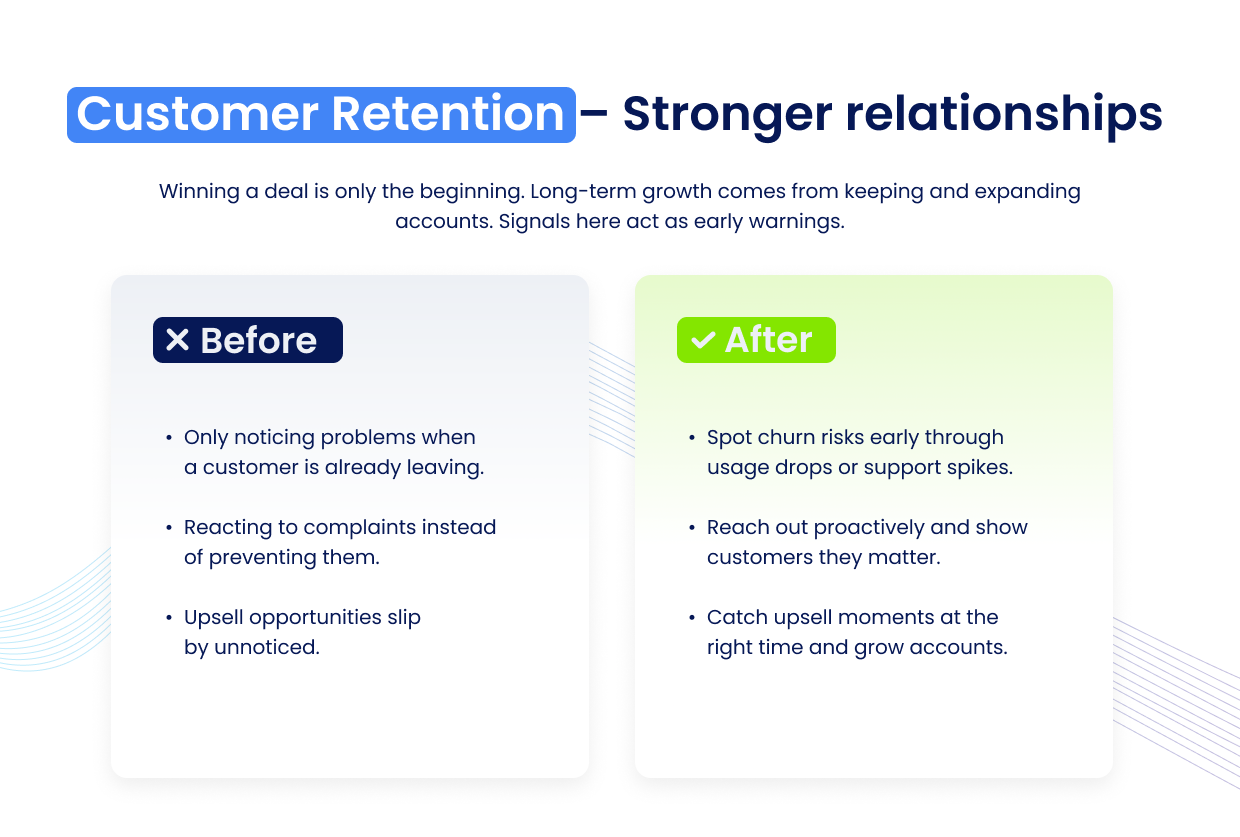
Customer Retention — Stronger relationships
Winning a deal is only the beginning. Long-term growth comes from keeping and expanding accounts. Signals here act as early warnings.
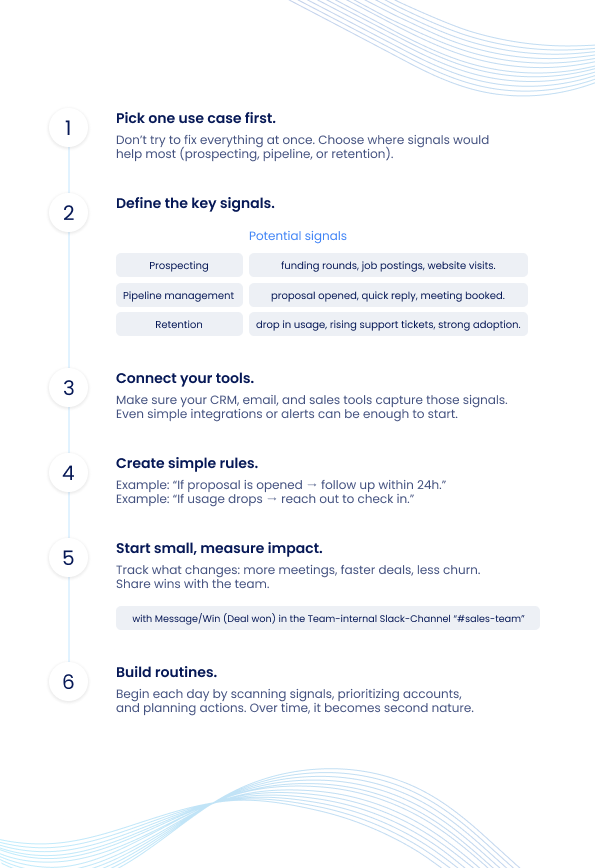
How to start using Data and Signals
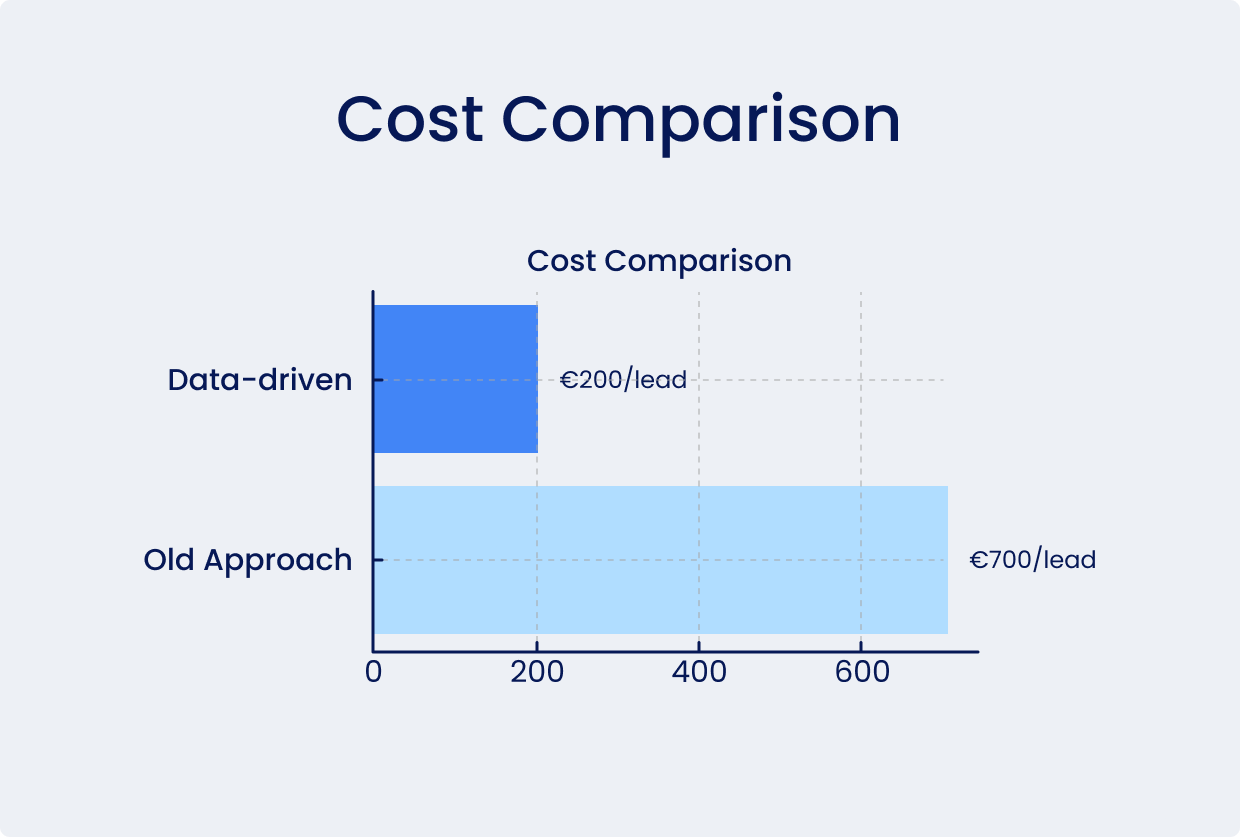
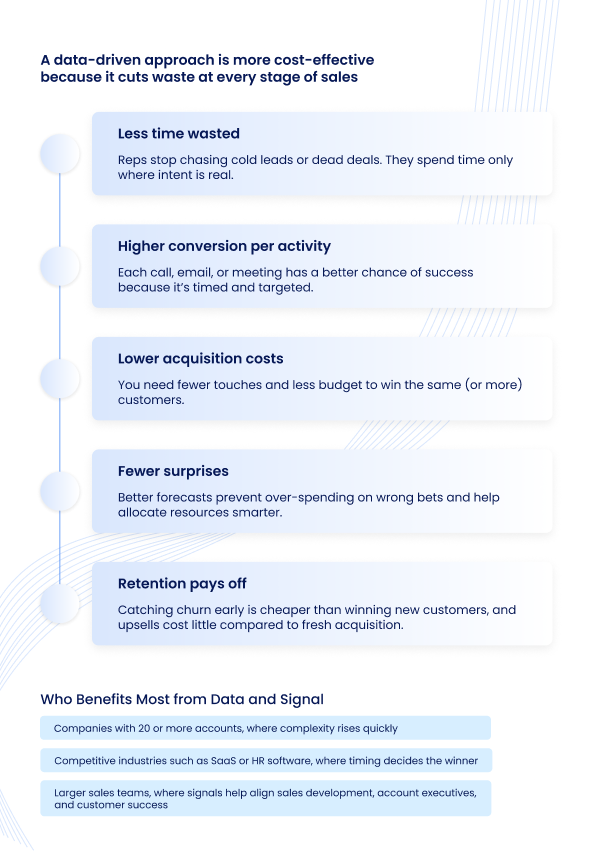
The Cost of not using Data and Signals
Relying on old sales strategies and tactics means leaving opportunities on the table.
Sales costs also remain unnecessarily high:
Who Benefits Most from Data and Signals
Quick Recap